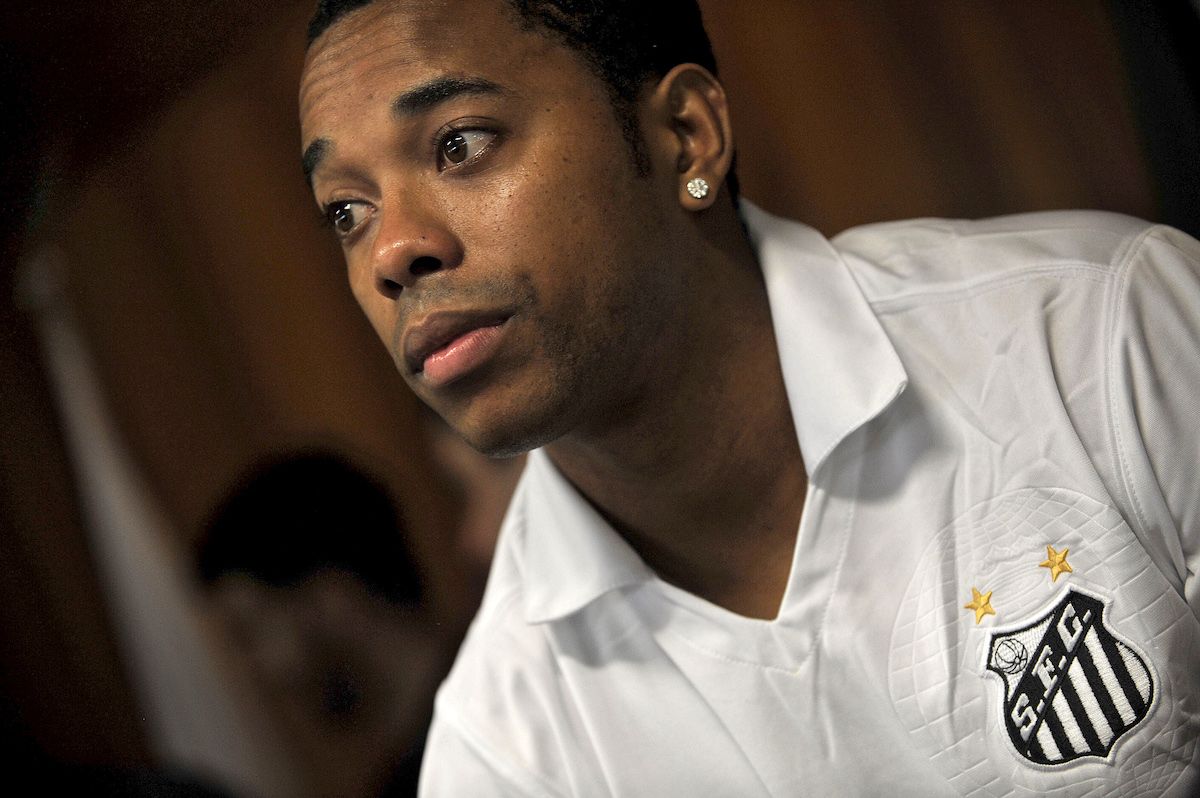
According to Portuguese Wikipedia and local-language media reports, Brazilian football star Robson de Souza, known as Robinho, has begun serving a 9-year sentence in Brazil for his conviction in Italy. Robinho, a former professional footballer who played as an attacker, was a key player for the Brazilian national team and various clubs, including Santos and Real Madrid, in Brazil and Europe.
Robinho’s football career was marked by numerous achievements, including winning the Campeonato Brasileiro with Santos, La Liga titles with Real Madrid, and a Serie A title with Milan. He also won several international titles with the Brazilian national team, including the Copa América and two Copas das Confederações. However, his career was also marred by a conviction for sexual assault in Italy, which has led to his current imprisonment (source: https://pt.wikipedia.org/wiki/Robinho).
The case against Robinho stems from a 2013 incident at a nightclub in Milan, where he was accused of being involved in a gang rape. In 2017, an Italian court convicted Robinho of sexual assault, and the sentence was later confirmed by the Milan Court of Appeal and the Italian Supreme Court in January 2022. Despite the conviction, Robinho was not extradited to Italy to serve his sentence due to the Brazilian Constitution’s prohibition on extraditing national citizens.
As a result, Robinho has begun serving his 9-year sentence in Brazil, a development that matters for English-speaking readers who may not have been following this story. The case highlights the complexities of international law and the challenges of enforcing convictions across national borders. It also raises questions about the accountability of high-profile individuals, like Robinho, who are accused of serious crimes. The fact that Robinho was able to avoid extradition to Italy for several years has sparked controversy and debate about the fairness and effectiveness of the justice system.
The implications of this case extend beyond Brazil and Italy, as it has the potential to set a precedent for how similar cases are handled in the future. As the world becomes increasingly interconnected, the need for cooperation and consistency in enforcing international law and protecting victims’ rights is becoming more pressing. English-speaking readers who are interested in international news, sports, and social justice issues will want to follow this story and its potential developments.
In the coming weeks and months, it will be important to watch how Robinho’s case is handled in Brazil and how it may impact the broader conversation about justice, accountability, and human rights. Will Robinho’s imprisonment in Brazil be seen as a step towards justice, or will it be viewed as a compromise that fails to hold him fully accountable for his actions? How will this case influence the way that similar cases are handled in the future, and what implications will it have for international cooperation on law enforcement and human rights issues? These are some of the questions that will be worth exploring as this story continues to unfold.