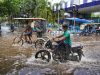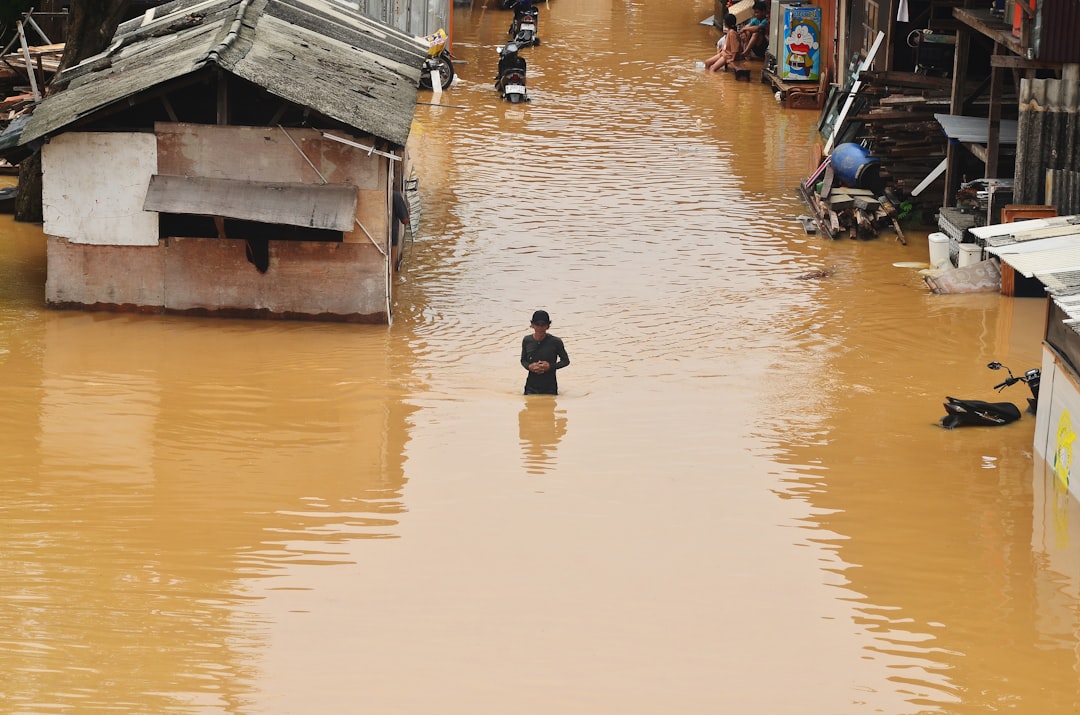
The death toll from severe flooding across Oman and the United Arab Emirates has climbed to at least 20, with Oman and Ras Al Khaimah bearing the heaviest casualties. The UAE recorded its heaviest rainfall in 75 years. In Dubai, the country’s largest city, the storm has left roads impassable, buildings damaged, and families displaced. Emergency crews are still pulling people from flooded areas.
The rain did not last long, but its effects will. For Dubai, a city built on rapid development and global connectivity, the immediate fallout is logistical chaos. Flooded streets have paralyzed a city whose economy depends on movement — of goods, of people, of commerce. The disruption is not temporary for everyone. Some families have lost their homes entirely. The government has announced plans to assess the damage, a step that signals the scale of recovery ahead.
Oman and Ras Al Khaimah are burying their dead. The UAE faces a different kind of reckoning. This was not a freak storm in a vacuum. The country’s geography — at the eastern end of the Arabian Peninsula, bordering Oman to the east and northeast and Saudi Arabia to the southwest — makes it vulnerable to extreme weather. A population of over 11 million people, concentrated in cities like Dubai, magnifies the risk. When water rises in a desert city built for sun, the infrastructure bends.
The government’s promise to implement prevention measures is a direct response to that vulnerability. The question is what those measures will look like. Drainage systems, building codes, emergency response protocols — all of it will be under review. The UAE has the resources to invest. The question is whether the investment will match the scale of the risk, or whether it will be reactive, piecemeal, too late for the next storm.
The flooding has also exposed a deeper tension. The UAE’s model — growth, tourism, global capital — depends on stability. Natural disasters do not respect that model. The extreme weather conditions have highlighted the importance of infrastructure and emergency preparedness. That is not a conclusion. It is a statement of the obvious from the ground. The streets of Dubai are still wet. The dead in Oman are not coming back.
For the families displaced in Dubai, the immediate need is shelter and supplies. Emergency services are working to provide both. But the recovery will take weeks, possibly months. The damage assessment alone will take time. The government’s focus is on aid and support. That is the right priority. But the long-term work — sustainable development, environmental protection, infrastructure that can handle a changing climate — has only just begun.
The storm has passed. The water is receding. The consequences are just starting to settle. Dubai will rebuild. The UAE will adapt. But the event has already changed the terms. A city that prides itself on control has been reminded that nature does not negotiate. The rainfall was a record. The cost will be, too.