On February 6, 2020, Nintendo confirmed what many in the gaming industry had feared for weeks. The company announced that production of its Switch consoles and Joy-Con controllers, manufactured in China, would face delays. The cause was the novel coronavirus outbreak.
This is a supply chain story as much as a gaming story. China is where most of Nintendo’s hardware is assembled. Foxconn, Nintendo’s main manufacturing partner, shut its Chinese plants in late January 2020. Those factories stayed closed for at least a week past the original Lunar New Year holiday. That extended shutdown is the bottleneck.
Nintendo put out a social media post. It said “it is expected that production and shipment delays will be inevitable for peripheral devices such as the Nintendo Switch and Joy-Con manufactured in China for the Japanese domestic market.” The company also warned that deliveries of Ring Fit Adventure, a game already out of stock, could be postponed.
The immediate warning was for Japan. But the problem does not stop there. Daniel Ahmad, a senior analyst at Niko Partners, told CNBC that the disruptions would spread. “Even if Nintendo only warned about postponements in Japan, it could also become a market problem in other countries like the United States,” Ahmad said.
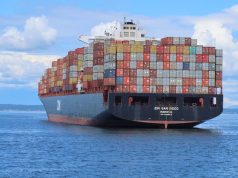
His point is blunt. China dominates the production of game hardware, phones, and other electronics. When a key factory stops, the whole chain stops. Ahmad noted that 96% of video game consoles are produced in China. That number puts the scale of the risk in plain view.
The timing matters. The Switch has been a massive success for Nintendo. It sold well through the 2019 holiday season. Demand was strong. Now, production is stalled at the very moment the company needs to restock shelves. The outbreak hit just as the Lunar New Year holiday began, a period when factories normally shut for a week or two. This year, they did not reopen on schedule.
Foxconn’s closure was not a choice. It was a response to a public health emergency. The coronavirus had spread rapidly across China, and the government ordered factories to stay closed to contain it. That order protected workers but broke the manufacturing rhythm.
Nintendo’s announcement was measured. It did not declare a global crisis. But the language was clear. “Inevitable” is not a word companies use lightly. It signals that the company sees no quick fix. The delays are not a matter of if, but of how long.
For now, the Japanese domestic market feels the pinch first. But the Switch is a global product. American, European, and other markets rely on the same Chinese factories. If those factories are not running, those markets will eventually run dry.
The Ring Fit Adventure delay is a small example of a larger problem. The game was already hard to find. Now, new copies will be even scarcer. That is a pattern likely to repeat across Nintendo’s lineup.
This is not a story about a company making a mistake. It is a story about a company hitting a wall it could not see. No one predicted a coronavirus outbreak would shut down Foxconn. But it did. And now the ripple effects are reaching store shelves.
Analysts are watching closely. The question is not whether delays will hit the United States. The question is when, and for how long. Ahmad’s warning is direct: the problem will not stop at Japan’s borders. The global game industry is about to learn how fragile its supply chain really is.