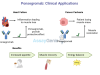
August 2024 marks the point when a new drug entered the U.S. market for a brutal post-transplant complication. The FDA approved axatilimab, branded as Niktimvo, for chronic graft-versus-host disease. This is a condition that arises when donor immune cells turn on the recipient’s own body after a stem cell or bone marrow transplant.
The disease is a constant threat for transplant survivors. It can damage skin, liver, lungs, and the digestive tract. Until now, treatment options were limited and often came with their own heavy toll. Axatilimab works by a different mechanism. It is a monoclonal antibody that blocks the colony stimulating factor-1 receptor. That receptor sits on immune cells called macrophages. By blocking it, the drug essentially tells those rogue donor cells to stand down.
This makes axatilimab a first-in-class medication, according to the FDA. No other approved drug for chronic graft-versus-host disease targets this specific pathway. That matters because patients who do not respond to standard steroids or other therapies have had few alternatives. The new drug offers a fresh avenue when others have failed.
Administration is straightforward. It is given as an injection into a vein. That is standard for monoclonal antibodies. The drug goes directly into the bloodstream, where it can begin its work. For patients already navigating a complex transplant regimen, this route is familiar. It fits into existing infusion center routines.
But the drug is not without risk. The list of common side effects is long. Infections top the list. That makes sense — the drug suppresses certain immune cells, which can leave the body vulnerable. Liver enzyme levels in the blood often rise. Phosphate levels drop. Anemia is common. Patients report muscle, bone, or joint pain. Pancreatic enzyme levels can climb. Low energy drags people down. Calcium levels may spike. So can levels of a muscle enzyme and a bone enzyme. Nausea, headache, diarrhea, cough, fever, and shortness of breath all appear on the list. Infusion-related reactions are a particular concern. Those can be serious, requiring immediate medical attention.
Close monitoring is essential. Healthcare providers must track blood work regularly. They need to watch for signs of infection. They must be ready to manage infusion reactions as they happen. The side effect profile is not mild. But for patients with severe chronic graft-versus-host disease that has not responded to other treatments, the calculus shifts. The disease itself can be debilitating and sometimes fatal.
The approval came through the FDA’s standard process. It reflects a growing understanding of the immune mechanisms driving graft-versus-host disease. Researchers have spent years trying to untangle why donor cells attack healthy tissue. The colony stimulating factor-1 receptor emerged as a key target. Macrophages that carry this receptor are heavily involved in the inflammation and tissue damage seen in the chronic form of the disease. Axatilimab is the direct result of that research.
For transplant recipients, this is not a cure. It is a new tool in a fight that can last years. It gives doctors another option when the standard playbook runs out. And for a patient population that often feels forgotten once the immediate transplant crisis passes, a new drug is significant. It means the field is still paying attention. It means there is still movement.