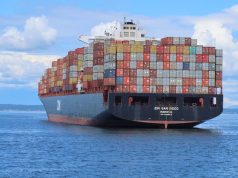
Turkey scrambled rescue boats into the Bosporus on November 28 after explosions ripped through two tankers, leaving at least one vessel on fire. The stricken ships were part of what has been called Russia’s shadow fleet — vessels under sanctions that still move oil and gas through global chokepoints. The blasts turned a routine transit into a crisis, forcing Ankara to pull crews off the burning hulls before the fires could spread.
The Bosporus is a narrow, 19-mile strait that cuts through Istanbul. It is the only sea route from the Black Sea to the Mediterranean. Every day, tankers haul crude, chemicals, and liquefied gas past Ottoman palaces and apartment blocks. A fire on one of those ships is not just a maritime emergency — it is a direct threat to a city of 16 million people. That is the reality Turkish authorities faced when the first explosion hit.
The tankers themselves are designed for bulk liquid cargo. Oil tankers, chemical carriers, gas carriers — each built to hold volatile substances in sealed compartments. The report on the incident notes that tanker design dates to the late 19th century, when iron hulls and steam pumps replaced wooden barrels lashed to decks. Modern tankers are floating steel tanks with sophisticated piping systems. But no amount of engineering eliminates the risk when a vessel is hit by an explosion in a confined waterway.
Sanctions have created the shadow fleet. Russia, cut off from Western insurance and port services after its invasion of Ukraine, began buying older tankers and running them under opaque ownership structures. These ships move Russian crude to buyers in Asia and the Middle East. They are often poorly maintained, underinsured, and crewed by sailors from developing countries who take the work because few other jobs are available. The Bosporus is a natural bottleneck for this trade, and the shadow fleet transits it regularly.
Now two of those tankers are damaged. Rescue operations are underway. The report does not say whether all crew members were evacuated, or if there were casualties. It does not name the ships, their flags, or their cargo. What is clear is that the Bosporus, already one of the world’s most dangerous straits to navigate, just became more dangerous.
The environmental risk is significant. A tanker fire can burn for days. If the hull breaches, oil or chemicals spill into currents that run straight through the Sea of Marmara and into the Aegean. Turkey has dealt with oil spills before — the 1999 collision of the Volganeft-248 and the M/V Independenta in the same waterway killed 43 people and dumped 20,000 tons of crude into the sea. That spill took years to clean. A similar event now, in a strait lined with tank farms and refinery terminals, would be catastrophic.
The incident also raises questions about how much control any government has over these ships. Sanctioned tankers are not tracked publicly the way legitimate vessels are. Their insurance is murky. Their crews are often not paid on time. When something goes wrong, the responsible party is hard to find. Turkey, a NATO member, has its own complicated relationship with Russia. It has not joined Western sanctions on Russian energy. But it has to manage the physical consequences of those sanctions — ships that no Western port will accept, sailing through Turkish waters, carrying cargo that the world still buys.
For now, the focus is on the rescue. Firefighting tugs are likely spraying water and foam on the burning tanker. Other vessels have probably been ordered to clear the strait. Shipping traffic through the Bosporus may be halted for days. That means delays for grain ships from Ukraine, oil tankers from Kazakhstan, and container vessels headed to the Mediterranean. The strait is a global supply chain nerve. When it gets pinched, prices move.
The report ends by calling for stronger safety standards and cooperation among shipowners, governments, and international organizations. That is the kind of statement officials make after a disaster. Whether anything changes is a different question. The shadow fleet is not going away as long as sanctions exist. The Bosporus is not going to widen. And tankers, for all their engineering sophistication, remain vulnerable to explosions, fires, and the simple fact that a ship full of fuel in a narrow strait is a bomb waiting for a spark.