The number of humans in space hit nineteen today—and that number tells a bigger story than the record itself. It points to a quiet shift in how space is used, who gets there, and what happens next.
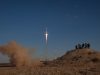
The three astronauts aboard the Russian Soyuz MS-26 spacecraft lifted off from the Baikonur Cosmodrome in Kazakhstan. Cosmonauts Aleksey Ovchinin and Ivan Vagner flew with NASA astronaut Donald Pettit. They crossed the Karman line and joined a crowd already in orbit: nine people on the International Space Station, three on China’s Tiangong station, and four on the SpaceX Polaris Dawn mission. That makes nineteen, a number no one has ever seen before.
But the raw count is less important than what it reveals. For decades, the ISS was the only game in low Earth orbit. Now there are three separate stations or missions operating at once. China runs its own station. Private companies fly their own crews. Russia still launches. The old monopoly is gone.
The ISS still holds the biggest share—nine crew members. That station has been continuously occupied since 2000. It was built as a Cold War thaw project, a joint effort between the United States and Russia, with contributions from Europe, Japan, and Canada. It works. But it is aging. Its future beyond 2030 is uncertain. Russia has talked about leaving early. China never joined. The station’s days as the sole symbol of international space cooperation are numbered.
China’s Tiangong station, with its three astronauts, is a direct competitor. It is newer, smaller, and entirely Chinese. Beijing has invited other nations to fly experiments on it, but the United States is barred by law from cooperating. That creates two separate orbits, two separate clubs. The record of nineteen people in space includes both clubs, but they do not mix.
The Polaris Dawn mission is something else entirely. It is a private flight, funded by billionaire Jared Isaacman, using a SpaceX Crew Dragon. Four people on board, no professional astronauts among them. They are testing new spacesuits, attempting the first commercial spacewalk. They are not going to any station. They are flying their own trajectory, their own schedule. That is new. That is the kind of mission that did not exist five years ago.
The Soyuz MS-26 mission, designated Soyuz 72S by NASA, is a routine crew rotation flight. But it carries Pettit, a veteran NASA astronaut who has flown three times before. He is 69 years old. That alone says something about how spaceflight has changed. It is no longer a young pilot’s game. It is a career path for scientists and engineers who keep going back.
What comes next is more of the same, only faster. More private missions. More Chinese taikonauts. More Russian launches. The ISS will eventually be replaced by commercial stations—Axiom Space is already building one. The number of people in space will keep climbing. Twenty, thirty, maybe more. The bottleneck is no longer technology. It is money and political will.
Nineteen people in space today. That is a record. But it is not a peak. It is a floor.